

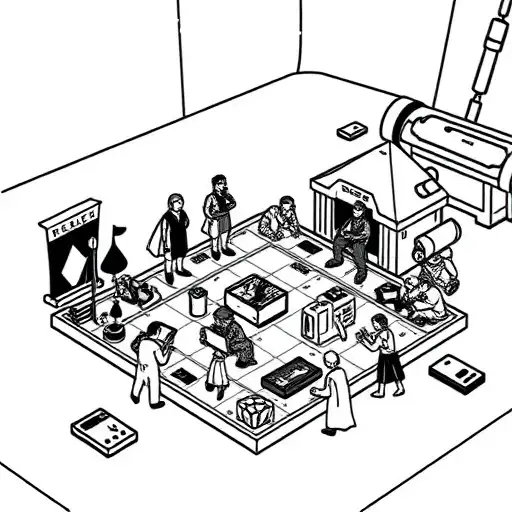
The Timeless Appeal of Tabletop Games
Tabletop games have experienced a renaissance in recent years, blending nostalgia with innovative gameplay mechanics that captivate modern audiences. These games, ranging from board games to role-playing adventures, offer a tangible, social experience that digital games struggle to replicate. Amidst the rising popularity, platforms like 9PBET.COM Oficial Slots Brasil #1 are providing unique opportunities for enthusiasts to engage with various game types, blending the traditional with innovative forms.
Evolution and History of Tabletop Games
The history of tabletop games dates back to antiquity, with evidence of board games from ancient Egypt, like Senet, and from Mesopotamia, like the Royal Game of Ur. These games have evolved over millennia, reflecting societal changes and technological advancements.
In the 20th century, tabletop games underwent transformative changes, marked by the introduction of classics such as Monopoly, Scrabble, and Risk. These games laid the groundwork for more complex strategy-based games like Settlers of Catan and Ticket to Ride, which introduced resource management and strategic planning elements that redefined the gaming landscape.
The Rise of Modern Tabletop Games
The 21st century has seen tabletop games evolve into sophisticated narratives and complex mechanics. Titles like Gloomhaven and Pandemic not only emphasize strategic cooperation and competition but also feature narrative-driven gameplay where decisions affect outcomes. These modern games attract a broad audience, including those who regularly engage with digital gaming platforms such as 9PBET.COM Oficial Slots Brasil #1, which blends traditional charm with digital convenience.
The Influence of Kickstarter and Crowdfunding
The advent of crowdfunding platforms like Kickstarter revolutionized the tabletop industry by giving independent designers a platform to launch innovative ideas and receive direct feedback from potential users. Games like Exploding Kittens and Scythe owe their success to enthusiastic backers who helped bring these projects to life. The crowdfunding model has democratized game production, offering niche and creatively ambitious projects a chance to flourish.
Immersive Experience: Tabletop Role-Playing Games (RPGs)
Role-playing games (RPGs), a subset of tabletop games, afford players the opportunity to engage in narrative-driven experiences. Games like Dungeons & Dragons and Pathfinder have carved niches by creating extensive lore and encouraging creative storytelling. In an era where digital RPGs dominate, like the offerings on platforms akin to 9PBET.COM Oficial Slots Brasil #1, these tabletop experiences emphasize the power of imagination and collaborative storytelling.
RPGs are not limited to fantasy; they extend to numerous genres, including horror, sci-fi, and historical themes, allowing players to explore diverse story arcs and character development opportunities. These games promote critical thinking, problem-solving, and interpersonal skills, which are beneficial beyond the gaming tabletop.
Social Interaction and Accessibility
One of the primary appeals of tabletop games is their ability to foster social interaction. As modern life increasingly intertwines with digital screens, many are turning to tabletop games to reconnect with friends and family through face-to-face interactions. Platforms like 9PBET.COM Oficial Slots Brasil #1 emphasize how these games provide a medium for social bonding, strategic thinking, and entertainment, accessible even in a hybrid digital-physical context.
Tabletop games are celebrated for their inclusivity and accessibility. They can be adapted for various age groups, cater to different interests, and are available at various price points, making them an attractive pastime for diverse audiences. Many games are designed with variable difficulty levels to engage both novices and veteran players, ensuring longevity in player engagement.
Tabletop Games and Educational Value
Beyond entertainment, tabletop games hold significant educational value. They can introduce players to complex concepts through engaging mediums. Strategy games emphasize resource management and critical thinking, while historical games can provide insights into different cultures and historical events. Educators often incorporate tabletop games as tools to illustrate theory through practical application, with interactive learning sessions that are both fun and educational.
Games that focus on teamwork and cooperative play develop communication skills and foster team dynamics. These aspects enhance players' soft skills, not just within the realm of gaming but translating to real-life scenarios, further emphasizing their value beyond mere leisure activities.
The Future of Tabletop Gaming
As technology continues to advance, the future of tabletop gaming looks promising. Virtual reality (VR) and augmented reality (AR) are gradually making their way into the industry, offering hybrid experiences that combine the tactile satisfaction of tabletop gaming with the dynamic visuals of digital platforms. This convergence is exemplified by the intersection of platforms like 9PBET.COM Oficial Slots Brasil #1, where traditional meets digital in innovative ways.
In this evolving landscape, tabletop games continue to thrive, fueled by passionate communities and innovative creators. Their enduring appeal lies in the unique blend of strategy, storytelling, and social interaction that stands the test of time, offering new ways for people to connect and engage through meaningful play.